
Benchmarked against 500,000+ prior assessments.
Used across NHS services, charities, and partner organisations
The challenge many services face
Most services already do mental health assessments.
The question is whether those assessments are as structured, comprehensive, and consistent as they could be.
Across many settings, assessment still depends on a mix of local templates, practitioner experience, and standard measures. That can work — but it can also lead to variation in structure, depth, and confidence from one assessment to the next.
What Galea does
Galea works alongside existing services to strengthen the assessment process, not simply digitise it.
Galea helps services:
- carry out more structured assessments
- build a broader, better-connected understanding of the person
- support more consistent and defensible judgement
- benchmark assessments against a large body of real-world practice
Galea does not replace clinicians, change care models, or attempt to diagnose. It supports a fuller assessment process and greater confidence in decision-making.
How Galea helps across the care ecosystem
Galea is designed to support three interconnected groups — each with different needs, but a shared goal: better mental health understanding and better-informed decisions.
For practitioners: Structured, comprehensive, and benchmarked assessments that support more confident judgement.
For individuals: Future patient-facing tools will extend Galea beyond practitioner-led assessment into self-assessment, continuity, and earlier insight.
For organisations: A stronger assessment foundation today, with broader population insight and reporting capability developing as the platform expands.
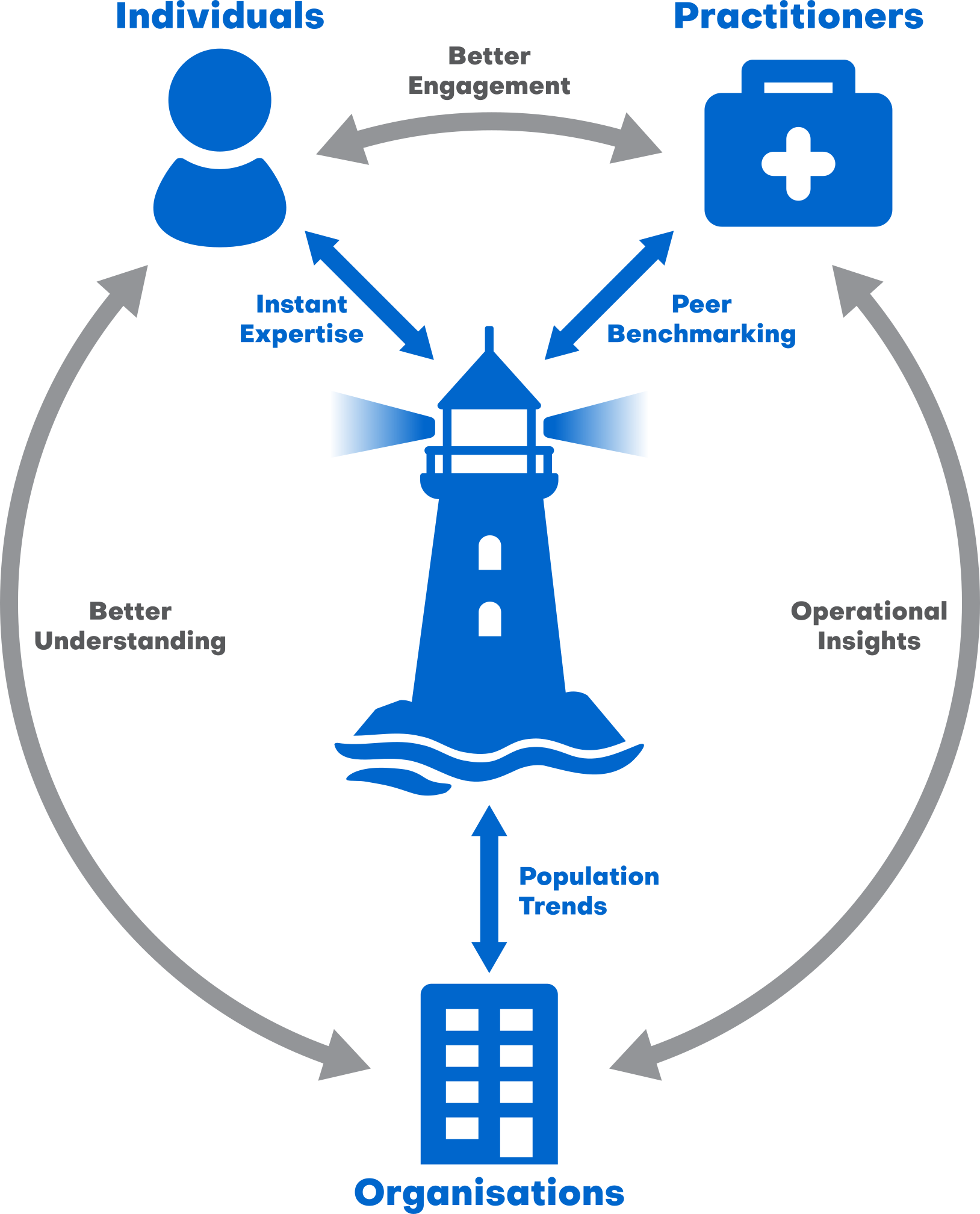
Galea’s current practitioner tool is the first layer of a broader platform direction.
As the platform evolves, this foundation will connect with:
- patient-facing tools such as Nomi
- self-assessment and continuity between contacts
- dashboards and reporting for organisational visibility and insight
That means services adopting Galea now are not just improving assessment in the present. They are also stepping into a wider platform designed to improve understanding across practitioners, individuals, and organisations.

Designed to support — not disrupt
Galea is deliberately:
- Low friction to adopt
- Aligned with existing pathways
- Governance-aware and responsible
- Priced to encourage adoption, not extraction
The goal is practical value now, with broader capability building over time.
Who Galea works with
Each context uses Galea differently — but the underlying opportunity is similar: improving the quality, structure, and confidence of mental health assessment.
Mental Health Specialists

- Secondary Care
- Secure & Forensic Settings
Front-line & General Health

- GPs
- A&E
- Emergency Services
Population Groups

- Workplace & EAPs
- Education & Youth
- Charities & Community Organisations
Built for trust, governance, and scale
Clinically validated
Developed through rigorous clinical research and real-world testing, Galea is built on over two decades of published evidence and practice-based learning. Our tools are grounded in validated psychological theory and shaped by feedback from clinicians across the NHS, academia, and frontline services.
Data security & privacy
We prioritise the safety and confidentiality of personal data. Galea is designed to meet the highest standards of data protection, including full compliance with UK GDPR and NHS DSPT guidelines. All data is encrypted, securely stored, and never used beyond explicit consent.
Proven at scale
With over 500,000 full assessments completed across NHS trusts, charities, and international partners, Galea has demonstrated its ability to support consistent, evidence-based decision-making in real-world settings.
A partnership approach
Early adopters work with Galea to:
- Shape how the platform evolves
- Define the metrics that matter in their context
- Explore what meaningful insight looks like in practice
Next steps
If you are looking to strengthen the quality, structure, and confidence of mental health assessment in your service, we’d welcome a conversation.